
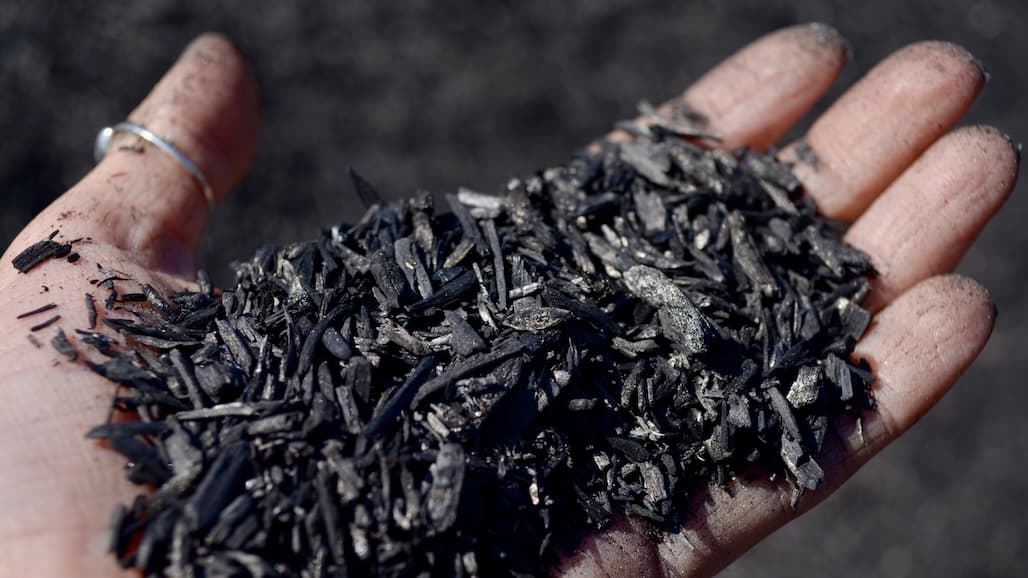
Treehouse California Almonds and Sitos Group, a California-based biochar manufacturing and climate technology company, announced the completion of the first load of biochar produced at the Sitos Treehouse commercial biochar facility in Delano, Calif. This facility is the first of its kind, converting almond by-product into a stable, carbon-rich material that will be returned back to the soil to promote soil health and durable carbon sequestration.
Biochar is a charcoal-like substance made by baking organic material in a controlled, low-oxygen environment. This process, called slow pyrolysis, converts agricultural biomass into a stable, carbon-rich solid, retaining carbon in the biochar rather than releasing it into the atmosphere through decomposition or open burning.
The biochar produced at the Sitos Treehouse plant will be distributed to growers throughout California. Once blended with compost, it will support carbon sequestration, improve soil health, reduce the need for chemical fertilizers, improve crop yields and help fields survive droughts by boosting soil moisture retention.
The 25,000 square-foot Delano facility first launched in October 2024 and is the first of its kind on the West Coast. The state-of-the-art slow pyrolysis facility, developed and operated by Sitos Group, converts almond shells, processed through Treehouse California Almonds’ hulling and shelling operations, into biochar thus repurposing agricultural co-products for sustainable use. Now just weeks away from full commercial-scale production, the plant features three slow-pyrolysis units, placed side by side, operating as a single unit and a fully integrated drying system with emissions control. Looking ahead, the Sitos Treehouse plant aims to further utilize the energy generated through the pyrolysis process, creating additional opportunities for clean energy production and more efficient use of the facility’s resources.
“California alone produces an abundance of biomass, and biochar gives us an exciting opportunity to put that material back to work. By transforming it into a valuable, carbon-rich product, we can support healthier, more regenerative soils and ecosystems while creating leading provider of premium quality almond ingredients to the world’s leading food companies and an award-winning pioneer in the sustainable farming category, and Sitos Group, lasting value and closed loop systems across the state,”said Jessica Bronner, director of Business Operations at Sitos Group. “Biochar has the potential to store significant amounts of carbon for the long term. At scale, its use could create meaningful opportunities to keep carbon sequestered while putting abundant biomass to productive use across a range of applications.”
“As California growers are challenged to meet the state’s goal of reducing greenhouse gas by 40% by the year 2030, the agricultural sector needs greater education and awareness of innovative, climate-smart solutions,” said Mark Masten, president of Treehouse California Almonds. “This scalable technology offers a new purpose for an otherwise costly by-product, and an opportunity for hullers to improve their carbon footprint. We hope other hullers throughout the Central Valley will soon join us in the effort.”
— Story contributed by SG Public Relations